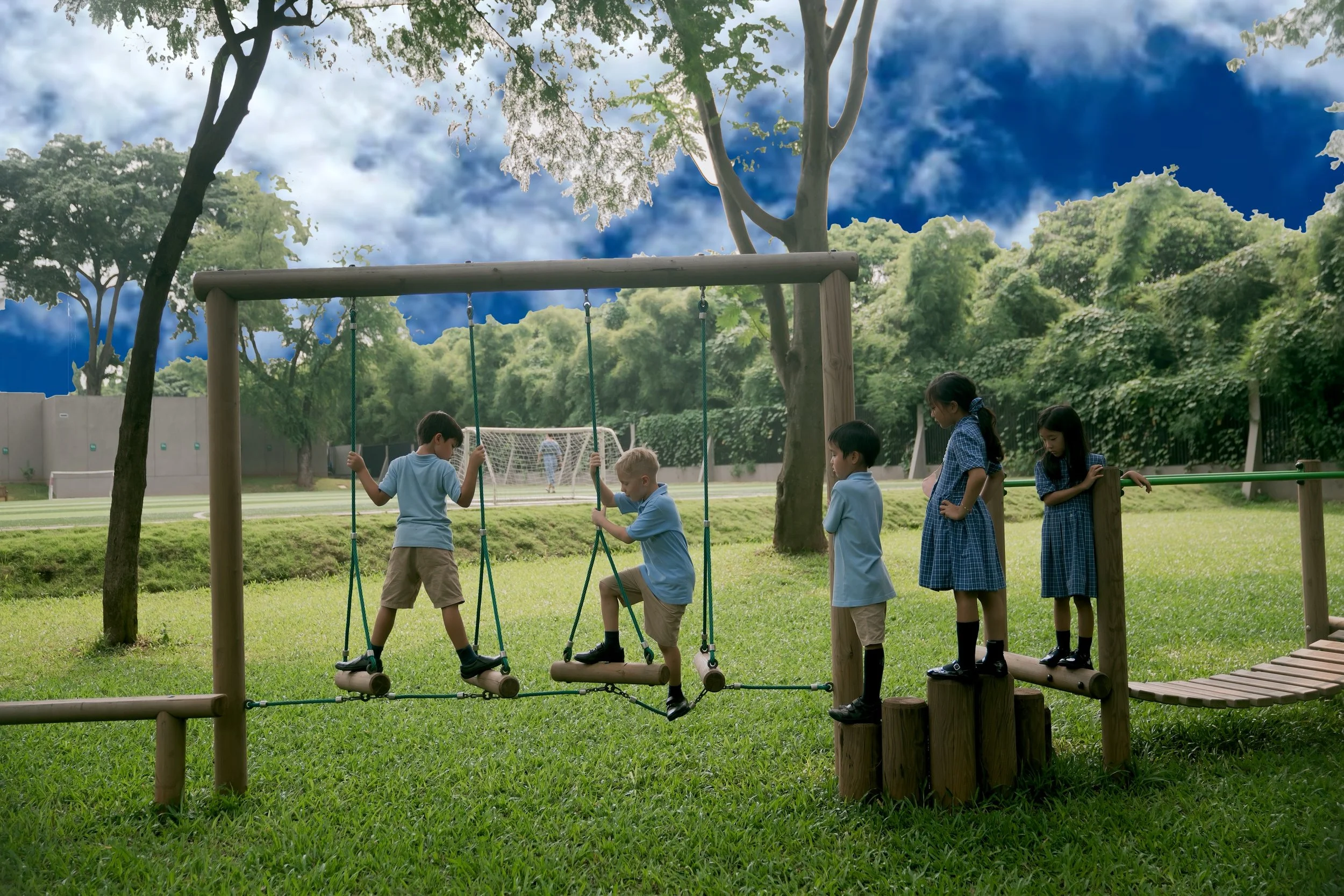
3.3 Relocating to Jakarta with Young Children
Relocating to Jakarta with young children is an exercise in rethinking how a city shapes family life. At first glance, the Indonesian capital can feel overwhelming—immense, humid, and built on a scale that defies instinctive navigation. Yet once the practical pieces fall into place, many families find Jakarta unexpectedly gentle. Young children settle quickly; neighbourhoods become familiar; routines form; and the city reveals a quieter, more domestic character than newcomers expect.
"In Jakarta, school choice precedes everything. Parents do not ask, 'Where shall we live?' but 'Where will the school run be bearable?'"
The key is to understand how families actually live here—not in theory, but in the texture of everyday life.
Understanding Jakarta as a City for Families
Jakarta is not experienced as one continuous city but as a series of self-contained pockets. Each pocket has its own gravitational pull: a school, a supermarket, a handful of cafés, a clinic, and a swimming pool. Families map their lives across these micro-territories, timing their movements carefully. A school run that takes twelve minutes at 7am may take forty by 4pm; the difference alters the shape of the entire day.
Early mornings are often surprisingly calm. There is a moment—between the first light lifting the humidity and the traffic beginning its slow swell—when Kemang’s side streets are quiet except for the hum of coffee machines starting up in % Arabica or Beau Bakery, and parents stepping out briefly before the heat sets in. By mid-morning, those same cafés fill with parents tapping at laptops while toddlers drift between tables clutching chocolate croissants.
"For young children, these neighbourhoods can be surprisingly freeing. Within their small radius, life is predictable and safe—an environment children respond to instinctively."
Neighbourhoods have distinct personalities. Kemang has a bohemian tangle of cafés and toy shops; Pondok Indah is suburban and orderly, with houses large enough for scooters and backyard pools; Cipete and Cilandak feel village-like, with shaded streets, local warungs and the occasional mango tree dropping fruit onto a quiet driveway. Families wanting newer infrastructure sometimes choose BSD or Alam Sutera, where parks and pavements exist in a way they rarely do in the city centre.
For young children, these neighbourhoods can be surprisingly freeing. Within their small radius, life is predictable and safe—an environment children respond to instinctively.
Choosing a School Before Choosing a Neighbourhood
In Jakarta, school choice precedes everything. Parents do not ask, “Where shall we live?” but “Where will the school run be bearable?” The daily commute—more than curriculum, house size or lifestyle—defines a family’s rhythm.
International schools operate on three different calendars:
• British/IB/American: August–June
• Australian: January–December
• Indonesian: July–June
The timing of the move influences how easily a child settles. Arriving in April, for example, feels very different from arriving in mid-August.
Choosing a curriculum at early-primary age
At ages 2–11, the distinctions between curricula are less ideological and more practical. British schools suit families wanting structure and continuity. A child moving between British schools—Jakarta to Dubai, or Jakarta to London—usually joins a familiar sequence of phonics, literacy and numeracy. The portability is a genuine advantage for mobile families.
IB PYP schools privilege inquiry and projects. They work well for children who like asking “why” and linking ideas. American and Australian primary schools use continuous assessment and broad instructional styles. They are often a comfortable landing point for families who have not yet committed to a long-term pathway.
Parents relocating from abroad almost always begin their school research early. Virtual tours are standard. A school’s “feel”—its calmness, warmth, organisation—is often more important than any published metric. Early-primary year groups (Years 2–5) frequently reach capacity first, not because schools are selective, but because class-size limits are set deliberately low.
Finding the Right Neighbourhood for Young Children
Young families tend to choose neighbourhoods that minimise friction and maximise predictability. In South Jakarta, that usually means staying close to the school and close to the places children use several times a week—pools, play spaces, and clinics.
Kemang, Cipete, Cilandak
Kemang is the city’s long-standing expat enclave. You can walk a child to Playparq Kemang for water play, find a shaded table under the frangipani trees, and know they will meet half their future classmates there. The surrounding streets are dotted with brunch spots—Toodz House, Fedwell, KOI Kemang—and cafés that turn into informal community hubs for parents.
Cipete and Cilandak are calmer and more residential. Houses sit behind leafy hedges; afternoons drift by with nannies steadying toddlers on scooters along quiet lanes. Clinics such as SOS Medika Cipete or Brawijaya Women & Children’s Hospital are five to ten minutes away, a reassuring fact during the first weeks of settling in.
Pondok Indah
More suburban and structured, Pondok Indah is built around wide roads, large homes and an unmistakably family-oriented mall, PIM. Parents often describe it as “convenient”—not glamorous, but predictable. At weekends, families drift in and out of air-conditioned arcades, pausing at Paul or Monolog Coffee for a breather from the humid heat.
Suburban alternatives
BSD, Alam Sutera and Bintaro offer space and calm but at the price of time. Parents who work from home or commute infrequently often choose these areas for their modern infrastructure, parks and quieter streets.
Daily Life and Routines
A family’s day in Jakarta is shaped by heat, traffic and the quiet rituals that emerge around them.
Mornings
School drop-off often takes place in warm, heavy air, with a faint smell of rain or car exhaust depending on the season. Yet the atmosphere is unhurried. Cars glide forward one or two at a time; children hop out with backpacks half-open; security guards wave them across. Most families build their morning around avoiding the second wave of traffic that settles in by 8am.
After drop-off, parents often gather at Beau Bakery or % Arabica for coffee—air conditioning battling the humidity—before heading to work or errands.
Afternoons
Afternoons belong to enrichment: swimming lessons in Kemang, martial arts classes in Cilandak, music at one of the many studios tucked between houses. A trip to Kidzania at Pacific Place or to Miniapolis in the mall offers a break when the heat is fierce. Children move through these routines with surprising energy; parents with strategic timing.
Weekends
Weekends revolve around familiar places: Ragunan Zoo’s shaded paths, GBK’s open expanses for scootering, Ancol for sea breezes, indoor climbing walls for restless children. Families may stop by Dapur Ciragil for Indonesian comfort food, or settle at Twin House in Cilandak for a calmer brunch under garden umbrellas.
Childcare and Household Support
One of the biggest lifestyle adjustments for relocating families is the availability of domestic support. Many households employ a nanny or helper—sometimes living in, sometimes commuting daily. The arrangement gives parents breathing space in a city where traffic and heat complicate even simple logistics.
Expectations need clarity. Families who establish routines and boundaries early tend to settle fastest. Nannies often accompany children to swim lessons, supervise playdates, or manage bags and snacks during mall excursions. For toddlers, the combination of school, structured play and attentive care can create a remarkably stable environment.
Early-years programmes, playgroups and drop-in centres are common in South Jakarta, offering young children a gentle rhythm to their mornings.
Health and Wellbeing
Clinics and hospitals
South Jakarta is well served by clinics familiar to expatriate families. SOS Medika Cipete remains a staple for paediatric care and vaccinations; Brawijaya Women & Children Hospital on Antasari handles everything from routine check-ups to specialist referrals. RS Pondok Indah (Pondok Indah) is often used for diagnostics and emergencies, while Mitra Keluarga Kemang offers a convenient midway option.
These clinics become part of the weekly geography of family life—close, reliable, and predictable.
Climate
Children adapt to Jakarta’s heat far faster than adults. Schools manage outdoor play sensibly, but families soon learn the value of cold water bottles, shaded playgrounds, and light cotton clothes.
Air quality
Parents usually invest in an air purifier or two; schools update outdoor-play policies when haze rises. Children adjust without much fuss—parents follow apps.
Building Social Networks
Parent communities at international schools are the heartbeat of early social life. WhatsApp groups form within days; names and faces become familiar quickly. For children, friendships develop in playgrounds, swimming pools and classroom corners.
Playdates—more often indoors than out—help children feel rooted. Many take place at home or in child-friendly cafés, where staff are accustomed to toddlers wandering between tables.
Families who make a conscious effort to engage with Indonesian culture—food, festivals, language—tend to feel more connected. The expatriate bubble is comfortable but permeable.
The First Three Months
Relocation is rarely seamless. Children may sleep poorly, cling more, or demand familiar routines. Parents may feel disoriented by the climate or the fractured geography of daily life. But the pattern usually steadies.
A typical settling curve includes:
• initial excitement,
• a short period of fatigue or overwhelm,
• and then gradual integration as routines form and friendships stick.
What matters is consistency: regular bedtimes, simple after-school rhythms, predictable weekends. Young children calibrate quickly when the adults around them project calm.
Summary
For families with young children, Jakarta can be a rewarding posting—warm, structured, surprisingly intimate for a city of its size. Success comes down to practical choices: picking a school before choosing a neighbourhood, keeping commutes short, and embracing the city’s micro-zones rather than resisting them.
Over time, many families find themselves unexpectedly attached to the rhythms: the morning light over Cilandak’s rooftops, the quiet hum of cafés after drop-off, the familiar chaos of Kidzania on a rainy Saturday, the steady presence of neighbours and school friends.
Jakarta asks for patience at first, but it returns a sense of belonging—to children most of all.
About the author
Joel, PGCE, QTS, BEd (Hons)
Joel is a creative primary educator whose practice centres on play-based learning and cognitive development. He previously worked at Oundle School, contributing to curriculum development and the design of outdoor learning programmes. Joel is recognised for his dynamic teaching style, engaging learning environments and his ability to inspire both curiosity and resilience in children.
Relocating to Jakarta FAQ
Is Jakarta a family-friendly city for young children?
Yes. Once you understand its micro-geography—small, predictable pockets around home, school and daily essentials—Jakarta becomes surprisingly manageable. Neighbourhoods such as Kemang, Cipete, Cilandak and Pondok Indah offer a stable routine, familiar faces and well-established family infrastructure.
Which neighbourhoods do most expat families choose?
Most families cluster in South Jakarta: Kemang for cafés and play spaces, Cipete/Cilandak for quieter residential streets, and Pondok Indah for suburban convenience. Families wanting modern housing and bigger homes often choose BSD, Alam Sutera or Bintaro.
Neighbourhood Guide for Families in South Jakarta
How important is living close to school?
Very. Commute times dictate family routines. Even short distances can stretch during peak hours, so most parents choose housing within 10–25 minutes of their child’s school. The school ru
n is usually the anchor around which everything else is arranged.
Map of International Schools in Greater Jakarta
Which clinics and hospitals do expat families use?
South Jakarta has several reliable options, including SOS Medika Cipete, Brawijaya Women & Children Hospital (Antasari), RS Pondok Indah and Mitra Keluarga Kemang. These are familiar to international schools and widely used for paediatrics and vaccinations.
Neighbourhood Guide: Health & Wellbeing
How quickly do young children settle after relocation?
Most children settle within 6–12 weeks. Expect tiredness, clinginess and a period of adjustment to heat and routine. Stability helps: predictable bedtimes, simple after-school rhythms and regular weekend patterns.
Mid-Year Admissions: What Parents Need to Know
What kind of childcare support is typical?
Many families employ a nanny or helper, either live-in or commuting daily. This makes childcare flexible and allows children to maintain consistent routines despite the city’s traffic and climate.
Are there good play spaces and activities for young children?
Yes. Popular options include Playparq Kemang, Kidzania (Pacific Place), Miniapolis, Ragunan Zoo, GBK for scootering, and numerous swimming and music schools across South Jakarta. These become part of the weekly rhythm for most families.
How do families form social networks?
International schools are the anchor. Parent WhatsApp groups, school events and weekend activities build quick familiarity. Playdates—often home-based or in cafés—help children feel at home.
Choosing a School in Jakarta: Early Years Guide
Should we choose the neighbourhood first, or the school first?
Almost always the school first. The school run governs the day, and most families build everything else around it. Even the best neighbourhood becomes impractical if the school commute is long.
How to Evaluate an International School
What do families find hardest to adjust to?
The heat, the traffic, and the fragmented geography of the city. What they often find unexpectedly delightful is the sense of community: familiar cafés after drop-off, friendly neighbourhood guards, reliable helpers, and schools that provide a stable, welcoming centre to daily life.