
The Particular Agony of the Jakarta Commute for Young Families
Traffic jams, flooding, and the endless "macet" are frustrating for everyone, but they are especially painful when they force your five-year-old to eat breakfast in the car yet again.
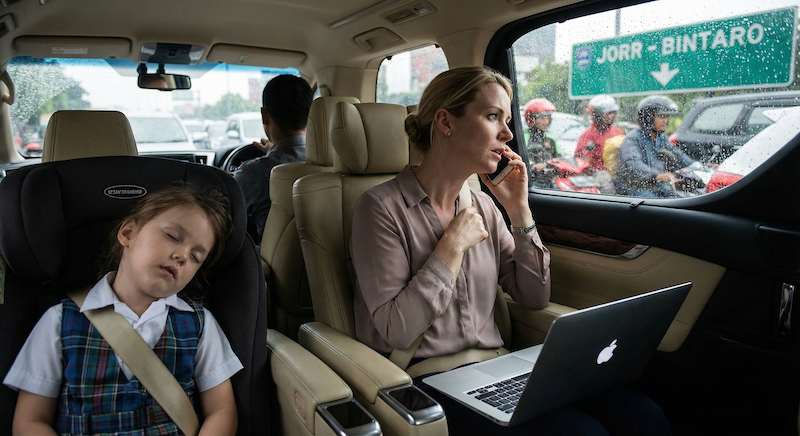
The Bintaro run: Mum juggles work calls on the JORR toll road while her daughter catches up on sleep
Sarah used to think she had a handle on Jakarta expat life. But that was before her daughter, Maya, started Reception.
Before school started, Sarah was willing to put up with the unpredictable 45-minute crawl from her home in Pondok Indah to the office in Sudirman. But as a mother of a four-year-old enrolled in a large international school campus in Bintaro, the logistics shifted from annoying to impossible.
"I found myself waking Maya up at 5:30 a.m. just to beat the worst of the toll road gridlock. She was a zombie," said Ms. Jenkins. "We essentially moved our morning routine into the Alphard. I’d be trying to get her to eat a boiled egg while she dozed off, all while I was frantically trying to join a conference call on a spotty 4G connection."
Ms. Jenkins recalls the guilt of looking in the rearview mirror. "I saw her slumped over in her car seat, still wearing her pajamas because we didn't have time to dress her at home. I realized we were spending more quality time with our driver, Pak Budi, than we were playing in our own garden."
Eventually, the Jenkins family reached a breaking point. They realized that the "big campus" facilities weren't worth the daily exhaustion. They began looking for schools closer to home in South Jakarta, prioritizing proximity over acreage.

Reclaiming the afternoon: Family time in their garden in Pondok Indah after making the switch to ISJ
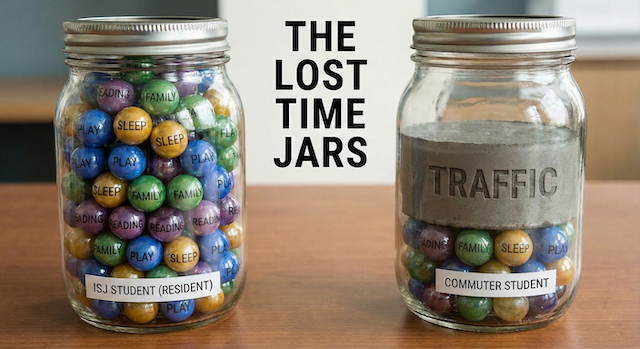
Trade the traffic for time together. A shorter commute means arriving home with energy left to play in the garden or explore activities in Jakarta with the family.
The "Tua Di Jalan" Phenomenon: Jakarta's Traffic Reality
Commute times in Jakarta are among the worst in the world. The local phrase "tua di jalan" (getting old on the road) has become a literal reality for the city's youngest residents. While data fluctuates, TomTom’s Traffic Index consistently ranks Jakarta in the top tier of global congestion, with drivers losing hundreds of hours annually to rush hour. For working parents living in popular residential areas like Cipete, Senopati, or Pondok Indah, these statistics speak to an underlying anxiety.
In Jakarta, a 10-kilometer distance isn't measured in minutes; it's measured in stress.
A sudden downpour or a stalled truck on the JORR (Jakarta Outer Ring Road) can turn a 30-minute school run into a 90-minute ordeal, forcing parents to choose between being present for their children or being present for their careers.
"What may have once been a frustrating commute could now mean missing the bedtime story or the school assembly. The stakes of losing those hours in the Jakarta heat are higher," explains a local family consultant. "We are seeing parents burn out, not from their jobs, but from the logistics of getting their children to them."
The Shift to Neighbourhood International Schools
One explanation for the traffic is the geography of schooling. Historically, international schools built massive campuses on the city's outskirts to accommodate Olympic-sized pools and rugby pitches. But as Jakarta’s traffic has worsened, compounded by odd-even license plate policies (Ganjil-Genap) and construction projects, families are being pushed to reconsider.
"The periphery is no longer accessible," says an urban planner based in Cipete. "Families are realizing that a swimming pool across town isn't useful if you're too tired to swim in it."
Long commutes in Jakarta correlate with more than just lost time; they are linked to respiratory issues from idling in exhaust fumes, increased cortisol levels in children, and a significant reduction in play-based learning.
For mothers returning to the workforce, the Jakarta school run is an additional hurdle. The "trailing spouse" often becomes the "traffic spouse," tasked with managing the complex logistics of drivers, nannies, and toll cards.
Reclaiming the "Kampung" Feel in South Jakarta
Such was the case for Anita, a graphic designer living in Pondok Indah. She initially enrolled her son in a prestigious school in Tangerang.
"We wanted the best," she says. "But we didn't realize that 'the best' included a two-hour daily round trip."
After a semester of tears, both hers and her son's, Anita pivoted. She moved her son to The Independent School of Jakarta (ISJ), a smaller, British curriculum school just ten minutes from their house.
"It changed our lives," Anita says. "Now, we walk to school sometimes. We see other parents at the local grocer. We have reclaimed our mornings."
She notes a shift in what parents value. "Before, parents asked about the size of the auditorium. Now, they ask, 'How long does it take to get here from my home?' They are realizing that time is the ultimate luxury."
| Time | The "Big Campus" Commute (Bintaro / BSD) |
The Local Commute (South Jakarta / ISJ) |
|---|---|---|
| 05:45 | ⏰ Alarm rings. Drag sleepy child out of bed. | 💤 Sleeping. (Deep REM cycle) |
| 06:15 | 🚗 Departure. Struggle with car seat. Hasty goodbye. | 💤 Sleeping. (Brain consolidating learning) |
| 06:45 | 🚦 Stuck. Tol JORR standstill. Child dozing awkwardly. | ⏰ Wake up. Calm breakfast at the table together. |
| 07:30 | 🏫 Arrival. Child groggy, parent stressed about return trip. | 🚶 Departure. A short drive or walk. Chatting about the day. |
| 07:45 | 📉 Class Start. Recovery mode. Energy low. | 📈 Class Start. Alert, active, and ready to play. |
| 16:00 | 🚫 Afternoon. Too tired for sports. "Meltdown zone." | ⚽ Afternoon. Swimming, tennis, or family time. |
Tips for Jakarta Commuting Parents
If you are currently stuck in the school run grind, here are some tips to manage the chaos:
Audit the Audio: Use the traffic time for education. Audiobooks or educational podcasts can turn a traffic jam into story time, reducing the feeling of "wasted" time.
The "Golden Hour" Rule: If the commute is unavoidable, ensure the car is a sleep-friendly zone. Neck pillows, window shades, and a strict "quiet time" rule can help children snatch an extra 30 minutes of rest.
Strategic Housing: If you haven't signed a lease yet, simulate the commute during rush hour (6:30 a.m.) before committing to a house or a school. Google Maps estimates are often optimistic in Jakarta.
Carpooling (The "Tebengan" System): Arrange to share the burden with neighbors. Even if you have a driver, having a friend in the car can lower a child's stress levels and make the journey feel like a playdate.
The "Backup" Bag: Always keep a "disaster kit" in the car: snacks, a change of uniform, a portable potty (for younger kids), and a fully charged power bank. Jakarta traffic is unpredictable, and being stuck for two hours without water is a nightmare.
Video Call Goodnights: If the macet makes you late for bedtime, FaceTime is a lifesaver. But, as always in Jakarta, make sure your signal is strong before you call.
ISJ is Jakarta's leading British international school for children aged 2–13, delivering the gold-standard English National Curriculum. Driven by our hand-picked teachers from top UK independent schools, our pupils consistently achieve remarkably high academic results. To see how Jakarta’s leading British school for children aged 2 to 13 uses singing to enrich learning, build confidence, and create a joyful, connected school community book a school tour.