
2.3 Questions to Ask on a School Tour
For many families, the school tour is the moment when prospectuses, websites and carefully worded brochures are replaced by something more tangible: the lived reality of the school. It is the point at which a parent can see lessons in action, observe how pupils behave when they are not being watched, and gauge whether the culture feels calm, purposeful and sincere. In a city like Jakarta, where international schools vary widely in size, history and ethos, the tour is often the most reliable part of the admissions process.
"The tour is the moment at which a parent can see lessons in action, observe how pupils behave when they are not being watched, and gauge whether the culture feels calm, purposeful and sincere."
Yet the visit can also be misleading if approached without a plan. Corridors can be staged, displays curated and tour routes designed to emphasise some aspects while quietly avoiding others. The aim is not to interrogate the guide but to ask the kind of questions that bring the everyday rhythms of the school into view.
Classrooms: what pupils experience
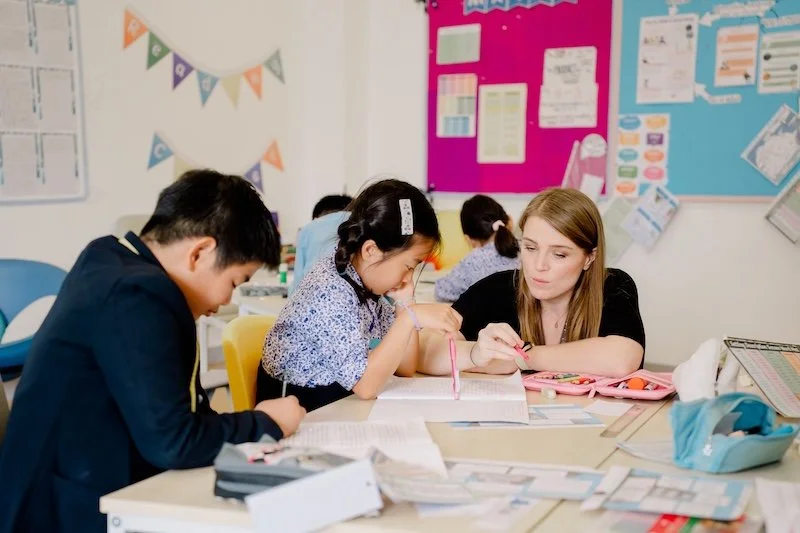
A good tour begins in the classroom, not the auditorium. Parents should ask how teachers structure lessons, how they adapt tasks for pupils at different levels, and how independence is introduced as children grow older. The key is to understand not the theory of the curriculum but how it plays out between teacher and pupil.
Look closely at what pupils are doing: Are they engaged? Are they writing, discussing, or working purposefully? Are expectations clear? A calm, focused lesson tells you more about the school than any list of facilities.
Teacher quality and the professional culture
The strength of a school rests on the training and consistency of its teaching staff. Parents should feel comfortable asking what qualifications teachers hold, how the school recruits, and how it ensures that teaching remains aligned across classrooms.
"A calm, focused lesson tells you more about the school than any list of facilities."
Strong schools speak openly about professional development. They can explain how lessons are observed, how feedback is shared and how new teachers are inducted into the school’s expectations. Staff stability is also important; high turnover can indicate deeper issues with leadership or culture.
A school confident in its teaching will answer these questions plainly.
Behaviour, expectations and pastoral care
Behaviour is rarely about rules alone; it is about atmosphere. Ask how the school defines good behaviour, what pupils are expected to do without being asked, and how staff intervene when expectations slip. You can often sense the school’s culture by how pupils move between classes or interact with teachers in corridors.
Pasoral care deserves careful attention. Parents should ask how the school notices when a pupil is struggling, how concerns are communicated and what systems exist to support children socially and emotionally. Good schools can describe this without resorting to generalities. They know what they do, and why.
Curriculum, assessment and academic pathways
Curriculum choices are often well understood before the tour, but the visit is a chance to ask how the curriculum is implemented. How does the school teach reading in early years? How does it track progress in maths and literacy across primary? How does subject depth or breadth develop in the middle years? How are pupils prepared for IGCSEs, the IB Diploma, APs or Australian state certificates?
Assessment is another area worth exploring. Parents should ask how often pupils are assessed, how results are used and how progress is shared with families. Schools that understand their own data tend to be more consistent in their practice.
Finally, inquire about destinations. What do pupils typically choose next? Strong schools will be honest about the range of outcomes, not only the highest achievers.
Co-curricular life: what happens beyond the timetable
A school’s character is often most visible outside formal lessons. Ask about sport, music, drama, clubs and service programmes. How many pupils participate? Are activities led by qualified staff? Are older pupils encouraged to take leadership roles?
A busy co-curricular programme is not necessarily the goal; the question is whether the activities feel woven into school life rather than added for effect. Parents should look for evidence that pupils enjoy their days rather than simply endure them.
Facilities and the practicalities of daily life
Facilities matter—science labs, libraries, arts studios and sports spaces all play roles—but they should be judged by how they support teaching. A large campus can be impressive, but if the classrooms feel cramped or poorly organised, the balance is wrong. Ask how specialist spaces are used, how safety is managed, and how supervision works across the day
Practical questions also matter: start and finish times, transport, after-school routines and how the school handles the sheer geography of Jakarta. These are the details that determine whether a family’s week runs smoothly.
Red flags: what to watch for
Parents rarely want to treat a school tour as investigative work, but certain signs merit caution. If the route avoids showing lessons, ask why. If explanations are vague or heavy on marketing language, push gently for specifics. If the school emphasises facilities over teaching, or cannot describe how staff are supported and aligned, take note.
None of these signs is decisive alone, but together they suggest a school that may be stronger in presentation than in practice.
A final thought
A school tour is not a performance to be judged but an opportunity to glimpse the everyday. The best schools feel confident and unhurried: lessons purposeful, pupils engaged, teachers calm, leadership candid. Parents should leave not with a checklist of amenities but with a sense of how the school thinks, how it teaches and how well it understands its own pupils
If the visit leaves you with clarity rather than questions, you are likely in the right place.
About the author
Clara, BEd (Hons), QTS
Clara is a specialist in early numeracy and inquiry-based learning. Prior to relocating overseas, she worked at St Paul’s School and later at Wellington College, supporting transition programmes between primary and lower-secondary phases. Clara is known for her clarity of instruction, encouraging learners to approach mathematics with curiosity, confidence and independence.
FAQ: Questions for my International School Tour
What should I prioritise during a school tour?
Focus on the classroom experience. Teaching quality, pupil engagement and the overall atmosphere tell you far more than facilities or slogans.
How to Evaluate an International School
Understanding School Fees
How can I tell if a school has strong teaching?
Ask about teacher qualifications, where staff are recruited from, and how staff are recruited, and how teaching is quality-assured. Look for consistent expectations across classrooms rather than isolated examples of excellence.
What signs indicate that behaviour and expectations are well managed?
Calm corridors, purposeful lessons and pupils who know what to do without being prompted. Schools with strong cultures can explain their behaviour expectations clearly and with minimal theatrics.
What questions reveal a school’s academic strength?
Ask how progress is monitored, how assessment works and how the school supports pupils at different levels. The clarity of the response is as telling as the system itself.
Comparing British, IB, American and Australian Curricula
How important is the co-curricular programme?
Very. Activities such as sport, drama, music and clubs shape confidence and belonging. The best schools integrate these into the rhythm of the week, rather than offering them as extras.
What should I watch out for during the tour?
Avoid schools that avoid showing lessons, rely on scripted answers or cannot describe how teaching is supported. Beautiful facilities can hide weak foundations.