
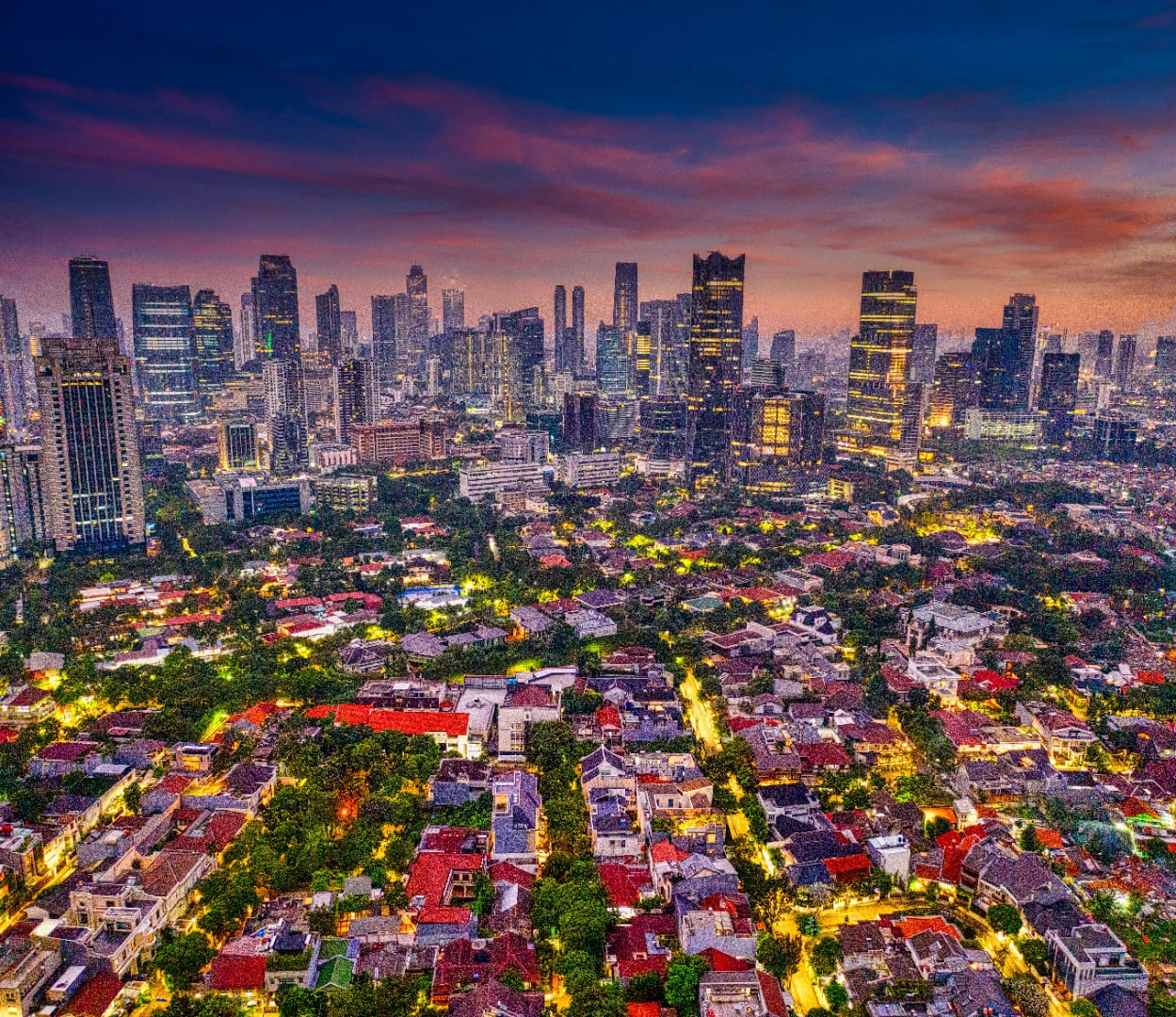
An Interactive Map: The Schools, Neighbourhoods, Offices & Malls
Neighbourhoods
Toggle layers
Schools Popular With Expats
The five schools below are the ones we see most often on expat family shortlists, and on Indonesian ones too.
| School | Style | Ages | Annual Fees (USD) |
|---|---|---|---|
| Jakarta Intercultural School (JIS) Best for: scale, breadth, US-style campus life | US-style, IB & AP | 3–18 | 19,000–39,000 |
| The Independent School of Jakarta (ISJ) Best for: pure British education and a pathway to the world's top universities | British Prep School | 2–18 | 9,500–31,000 |
| British School Jakarta (BSJ) Best for: families in Bintaro wanting a full K–13 pathway | Blended British / IB | 3–18 | 10,000–34,500 |
| Australian Independent School (AIS) Best for: learning support & an inclusive community | Australian & IB | 3–18 | 3,500–25,000 |
| New Zealand School Jakarta (NZSJ) Best for: close-knit community at a lower price point | New Zealand Curriculum | 1–18 | 7,000–17,000 |
Commute Times
The Key Neighbourhoods
Jakarta's international schools cluster in a few areas. The sections below run through each area and the schools that sit in it. For the housing, cost, and lifestyle trade-offs within each one, see our guide to the best neighbourhoods for expat families in Jakarta.
South Jakarta

Spanning Pondok Indah, Kemang, Cipete, and Cilandak, this is the centre of gravity for internationally minded families. The city's best lifestyle infrastructure (Pondok Indah Mall, Lotte Mall, golf courses, the Water Park) plus the highest concentration of cafes, restaurants, and children's activities. Schools nearby include JIS, ISJ, NZ School, and AIS.

Central Jakarta: The CBD
SCBD, Senopati Business District, has a strong dining and nightlife scene, plus shopping at Grand Indonesia. A great fit for professionals and expatriates without school-age children.
North Jakarta: PIK and Kelapa Gading
PIK is popular with Indonesian-Chinese and mainland Chinese expat communities, functioning as a self-contained city with excellent restaurants, particularly for Chinese and Japanese cuisine. A growing international community is developing here. Schools nearby include NJIS, Tzu Chi School, and SIS Kelapa Gading.
East Jakarta
Largely industrial and local residential. Worth considering only if you happen to work in the area, though a handful of international schools have campuses here. Schools nearby include ACS East and Global Sevilla.
West Jakarta
Strong Indonesian-Chinese demographic, offering a more local lifestyle geographically separated from expat hubs. Note: 'local-international' schools here may differ in school culture and expectations from schools in Singapore, Hong Kong, or Europe. Schools nearby include Sampoerna Academy and Tunas Muda.
Bintaro and BSD: Just Outside Jakarta

A trade-off: less local traffic, but significant distance from the city centre. A growing number of families are making the move, drawn primarily by the large British School Jakarta campus and a more relaxed pace of life. Wellington College is building a primary campus in BSD with a planned opening in late 2026, though an earlier attempt to establish in South Jakarta was abandoned due to low enrolment. Surprisingly for some, air pollution in Bintaro is usually higher than in South Jakarta.
Jakarta Intercultural School (JIS)
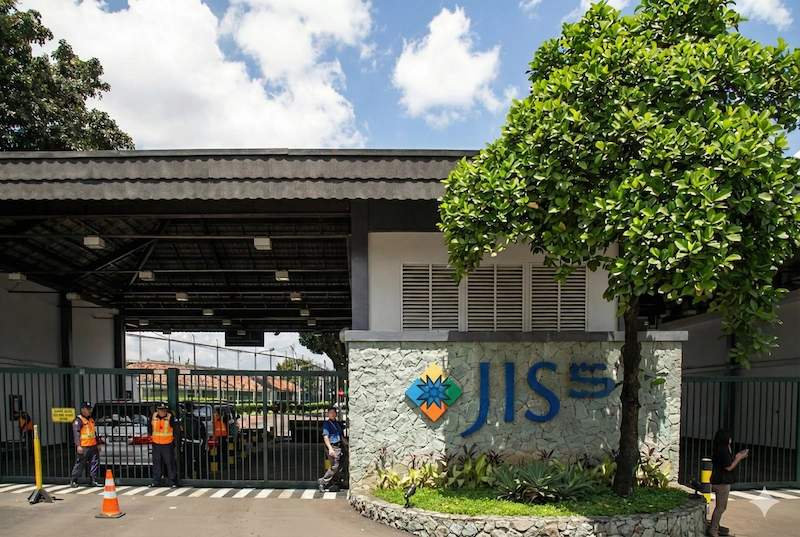
Established in 1951, JIS is the flagship of the Jakarta school scene and often the first name expats encounter. It functions almost like a small university, with massive campuses, world-class facilities, and a deep bench of extracurricular programmes from robotics to competitive swimming. The culture is distinctly American: confident, high-energy, and heavily invested in school spirit. JIS produces well-rounded graduates, many of whom go on to excellent universities worldwide. The sheer scale offers incredible opportunities, though families who prefer a smaller, more intimate setting may find it overwhelming.
- Style: US-style, IB & AP
- Ages: 3–18 years
- Annual Fees: USD 19,000–39,000
- Location: South Jakarta (Pondok Indah & Cilandak)
- Accreditation: CIS, WASC
The Independent School of Jakarta (ISJ)

The only British international school in Pondok Indah, serving children from age 2 through to A-Levels. ISJ follows the English National Curriculum taught by teachers recruited from leading UK independent schools. A purpose-built Senior Campus opens in 2028, 300 metres from the current Junior Campus, giving students a continuous pathway from Pre-Nursery through GCSEs and A-Levels without changing school. The first A-Level cohort will be students already in the school. Academically focused but not factory-like. The philosophy is that school should be fun, that happy children learn faster, and that knowing every child by name is not optional. ISJ is part of The Schools Trust, a UK-registered education charity responsible for establishing more than 15 British international schools worldwide, from Beijing to Brazil. The Trust requires all its schools to achieve BSO (British Schools Overseas) accreditation. Across the Trust network, 65–81% of GCSE grades are at A*/A and graduates routinely secure places at Russell Group and Ivy League universities.
- Style: British "Independent School"
- Ages: 2–18 (Pre-Nursery to A-Levels)
- Annual Fees: USD 9,500–31,000
- Location: South Jakarta, Pondok Indah
- Accreditation: BSO (British Schools Overseas)
Arrange a campus tour or find out more about admissions.
British School Jakarta (BSJ)

A well-established school with an impressive campus in Bintaro, offering the kind of space and greenery that's hard to find inside Jakarta proper. BSJ is a strong all-rounder with solid academics, good pastoral care, and a wide range of activities. While it carries the "British School" name, it has evolved into a more international model, blending the English National Curriculum in early years with MYP and IB in the senior school. For families who live south or are happy to relocate to Bintaro, it's an excellent choice. The main consideration is geography: it's a meaningful commute from Pondok Indah or Kemang.
- Style: Blended British / IB
- Ages: 3–18 years (Foundation to Year 13)
- Annual Fees: USD 10,000–34,500
- Location: Bintaro (South Tangerang)
- Accreditation: CIS, COBIS
AIS Indonesia

An established, inclusive school with a strong sense of community. Located in Pejaten, AIS is known for its "success for all" philosophy, with a focus on student well-being and a well-regarded Learning Support programme. Families with children who have additional learning needs may want to include it on their visit list. The purpose-built campus has solid functional facilities and a down-to-earth, egalitarian feel.
- Style: Australian Curriculum & IB
- Ages: 3–18 years
- Annual Fees: USD 3,500–25,000
- Location: South Jakarta, Pejaten
- Accreditation: CIS
New Zealand School Jakarta (NZSJ)

A conveniently located, budget-friendly option at the top of Kemang with a genuinely warm community feel. NZSJ operates with more modest facilities than the bigger schools, but families who value a close-knit, personal environment, where teachers know every child by name, often find it the right fit. The holistic New Zealand curriculum emphasises well-rounded development, and the school's cheerful, unpretentious atmosphere makes new families feel welcome quickly.
- Style: New Zealand Curriculum
- Ages: 1–18 years
- Annual Fees: USD 7,000–17,000
- Location: South Jakarta, Kemang
Compare All Jakarta International Schools
All fees are annual tuition in Indonesian Rupiah (IDR) millions. Fees may not include lunch, transport, exam fees, EAL, SEN, or other charges. Please verify directly with each school. Fees updated April 2026.
| School | Curriculum | Fees (IDR M/yr) |
|---|---|---|
| Jakarta Intercultural School (JIS) | American, IB | 305–633 |
| British School Jakarta (BSJ) | British, IB | 159–561 |
| The Independent School of Jakarta (ISJ) | British | 149–505 |
| Australian Independent School (AIS) | Australian, IB | 53–401 |
| ACG School Jakarta | IB, British | 158–415 |
| BINUS School Simprug | IB | 180–340 |
| Sampoerna Academy Jakarta | American, IB | 120–310 |
| Sinarmas World Academy | IB, British | 100–300 |
| Sekolah Pelita Harapan | IB, British | 100–300 |
| ACS Jakarta | IB, British | 242–295 |
| Tunas Muda School | IB | 80–280 |
| New Zealand School Jakarta | New Zealand | 112–279 |
| NJIS | IB, British | 90–250 |
| Global Jaya School | IB, British | 95–245 |
| Cikal School | IB | 85–220 |
| Bina Bangsa School | British, IB | 70–200 |
| Global Sevilla | British | 40–190 |
| HighScope Indonesia | American | 50–180 |
| Mentari Intl Bintaro | IB | 65–175 |
| Mentari Intl Jakarta | IB | 62–170 |
| Mentari Intl Grand Surya | IB | 60–168 |
| Raffles Christian School | British | 60–165 |
| Jakarta Multicultural School | British | 45–160 |
| Kharisma Bangsa | British | 55–155 |
| Jakarta Montessori School | Montessori, IB | 75–150 |
| Penabur International | British | 50–145 |
| Tzu Chi School | IB | 52–145 |
| Springfield School | British | 52–142 |
| SIS Kelapa Gading | British, IB, Singapore | 60–140 |
| Gandhi Memorial Intl School | IB, British | 49–140 |
| SIS South Jakarta | British, Singapore | 58–138 |
| SIS Pantai Indah Kapuk | British, Singapore | 55–135 |
| Millennia World School | British | 48–135 |
| French School Jakarta | French | 48–132 |
| Ipeka Christian School | British | 45–130 |
| Deutsche Schule Jakarta | German | 45–125 |
| Woodlands Montessori | Montessori | 55–120 |
| Jakarta Taipei School | British | 42–118 |
| Blossom International | British | 42–115 |
| NationalHigh Jakarta | American | 40–110 |
| Narada School | British | 38–105 |
| Jakarta Korean School | Korean | 38–105 |
| Australian School Sacred Heart | Australian | 38–105 |
| Saint Peter's School | British | 36–102 |
| Stella Maris School | British | 35–98 |
| Jayakarta Montessori | Montessori | 45–95 |
| Jakarta Academics | American | 35–95 |
| Jakarta Nanyang School | Singapore | 35–95 |
| Bunda Mulia School | British | 33–92 |
| ISA Jakarta | American | 32–88 |
| Saint John's Catholic | British | 31–86 |
| Mentari Kosambi | IB | 30–85 |
| Sekolah Tara Salvia | British | 30–82 |
| Bunda Mulia Sentul | British | 29–80 |
| Sekolah Pilar Indonesia | British | 28–82 |
| Sekolah Tunas Bangsa | British | 40–85 |
| Putera Sampoerna Foundation | British | 28–80 |
| Kanaan Global School | British | 27–78 |
| Hope Academy | American | 27–78 |
| Saint Monica Jakarta | British | 28–76 |
| Sekolah Victory Plus | British | 25–75 |
| Jubilee School | British | 26–74 |
| Lilin Bangsa | British | 26–72 |
| HolyStar Christian | British | 25–70 |
| Sekolah Bukit Sion | British | 24–68 |
| Mutiara Harapan Islamic | British | 23–67 |
| Al Jabr Islamic School | British | 22–65 |
| Sekolah Perkumpulan Mandiri | British | 22–62 |
| Sekolah Lentera Indonesia | British | 21–60 |
| BTB School | British | 20–58 |
All fees are annual tuition in IDR millions and may not include lunch, transport, exam fees, EAL, SEN, or other charges. Please verify directly with each school. Fees updated April 2026.
Final Thoughts
Nothing can replace walking through a campus and meeting the people who'll be teaching your child. We hope the information we've shared here helps. We've worked to be fair and accurate across all schools listed. If you spot an error or feel a school has been misrepresented, please let us know.
Common Questions About Jakarta International Schools
The questions we hear most often from families relocating to Jakarta, answered directly.
How much does international school in Jakarta cost?
Tuition ranges from around $3,500 to $39,000 per year, but that's not the full number. Add registration fees ($1,000–$3,500), development levies, exam fees, transport, and uniforms, and the true first-year cost can be 20–30% higher than advertised. Ask every school for a total cost breakdown for your child's year group. For reference, see ISJ's published fees.
What's the difference between British, IB, and American curriculum?
British is structured and sequential: Key Stages leading to IGCSEs and A-Levels. The most globally portable. IB is inquiry-based and broader, with the Diploma requiring six subjects plus extended essay, TOK, and community service. American uses a credit-based system with AP courses, offering the most elective choice and the natural path to US universities.
If you're likely to move countries again, pick the curriculum that matches your next destination. The Curriculum Guide covers this in more detail.
Should I choose the school first or the house first?
The school. Always. Jakarta traffic turns a 5km drive into 45 minutes during school hours. Pick the school, then find housing within a 15–20 minute radius. If you choose a school in Bintaro, plan to live in Bintaro.
How bad is the school-run traffic, really?
Bad enough to decide where you live. A school 10 minutes away on Google Maps can take 40–60 minutes during the 6:30–8:00am school run. Keep the commute under 20 minutes and choose your neighbourhood accordingly. Buses sit in the same traffic.
Can my child start mid-year?
Usually yes. Most schools accept rolling admissions throughout the year, but popular entry points (Nursery, Reception, Year 7) fill up at top schools. Contact schools early, even before the move is confirmed.
How far ahead should I start planning?
Three to six months is ideal. Book tours, submit enquiry forms, and gather documents (school reports, passports, vaccination records, learning support assessments). Waiting lists at the most popular schools are real. Families who leave it until the last month often find their first choice full. See the age guidelines for entry points.
What if we're only in Jakarta for one or two years?
Curriculum continuity is what matters. If your child will return to a British school, keep them in British curriculum here. Switching systems is manageable at primary level but gets disruptive from age 11 onward. Also check the school's reporting format: will the next school accept the reports your child leaves with?
My child has additional learning needs. Which schools can help?
Most schools say they offer learning support; the depth varies enormously. AIS Indonesia has the strongest reputation for inclusive education. JIS has a formal model but caps supported students per year group. Smaller schools may be more flexible with fewer specialist resources. Bring full assessment documentation and ask to speak with the learning support team directly, not just admissions.
How do I tell if teachers are properly qualified?
"International school" is loosely regulated in Indonesia. Ask whether staff hold recognised qualifications from their home country (QTS in the UK, a licence in the US or Australia). Schools accredited by CIS, COBIS, or WASC are held to external standards. On your visit, ask to meet the teachers who would actually teach your child.
Are the expensive schools better?
Generally, yes. Higher fees fund better teachers, better facilities, and the support infrastructure (counsellors, SEN specialists, university advisors) that makes a real difference. A handful of mid-range schools punch above their weight, and a few expensive ones coast on brand recognition. If a school charges $5,000 a year and claims to employ qualified British teachers, ask how.
What does the admissions process look like?
Enquire, tour, apply, assess, enrol. Book the tour early; it's the single most useful thing you can do. From Year 1 upward, expect a simple assessment in English and maths. Early years entry is often non-selective. Processing takes days to weeks; some schools charge $200–$400 just to apply.
Will my child's education transfer if we move to another country?
British and IB are the most portable: schools exist in almost every major expat city, and records transfer cleanly. American transfers well within the US system. Problems arise when switching between systems at secondary level. Choose the curriculum you're most likely to continue with.
Is Jakarta safe for school-age children?
The South Jakarta expat neighbourhoods are generally safe, well-serviced, and accustomed to foreign residents. Schools have gated campuses, ID checks, and controlled access as standard. The practical concerns are traffic, air quality (the AQI regularly exceeds healthy levels), rainy-season flooding (November to March), and dengue. Manageable, but worth understanding before you arrive.
What if my child doesn't speak much English?
Most schools offer EAL programmes, but delivery varies: some embed support in the classroom, others pull students out. A few cap EAL numbers per year group. At primary level, children generally pick up conversational English within months. At secondary level the academic language demands are much higher, so the quality of EAL support matters significantly.